Uneven garage door movement typically results from broken or stretched torsion springs, worn cables, bent tracks, or damaged rollers that disrupt balanced lifting on both sides. Precision Door of Irvine identifies these imbalances through on-site diagnostics. When one side bears more weight than the other, it strains the opener. Accelerates further damage, making prompt inspection essential for safety.
What Signs Point to an Uneven Garage Door?
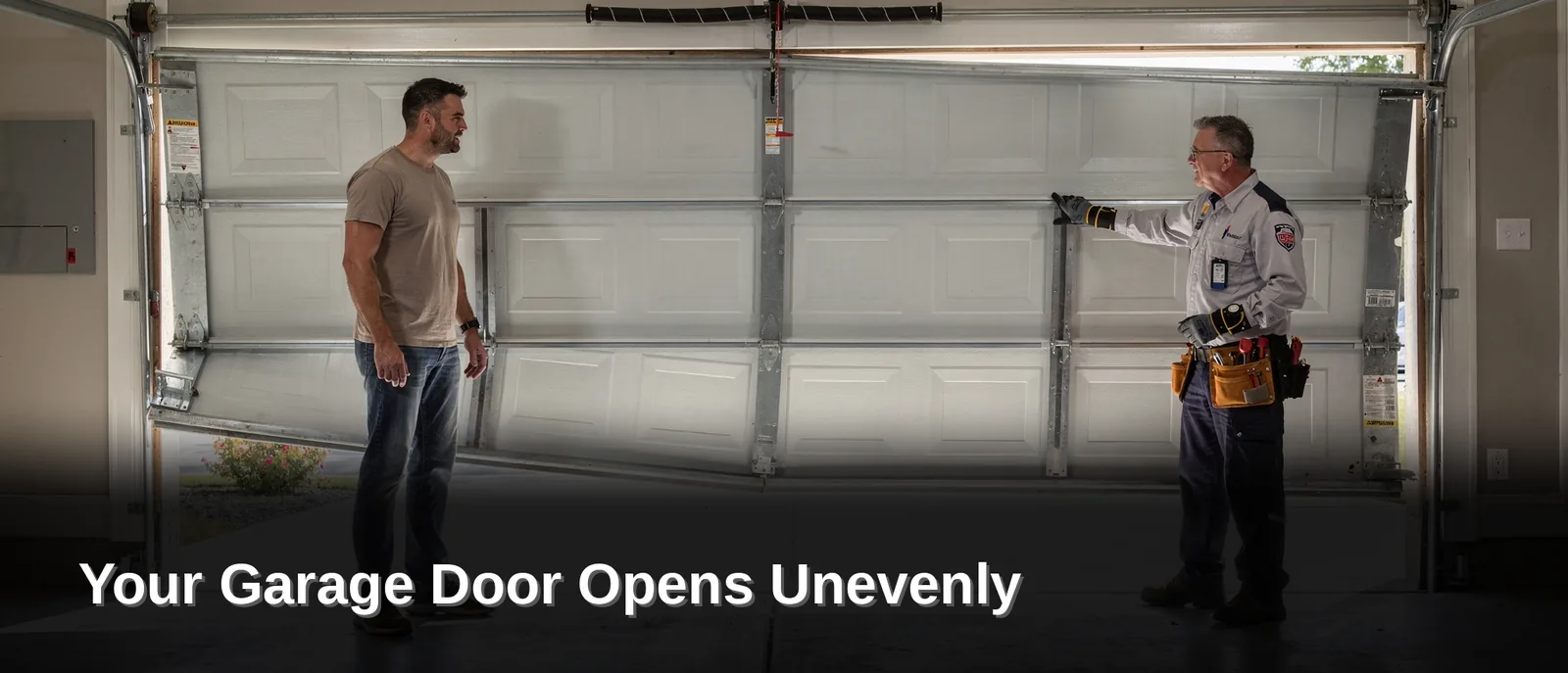
Three warning signs usually appear when a garage door opens unevenly: a visibly lower side, a tilting motion during travel, and a straining opener. Each signal points to the same underlying problem: a system that no longer lifts or guides the door as it should.
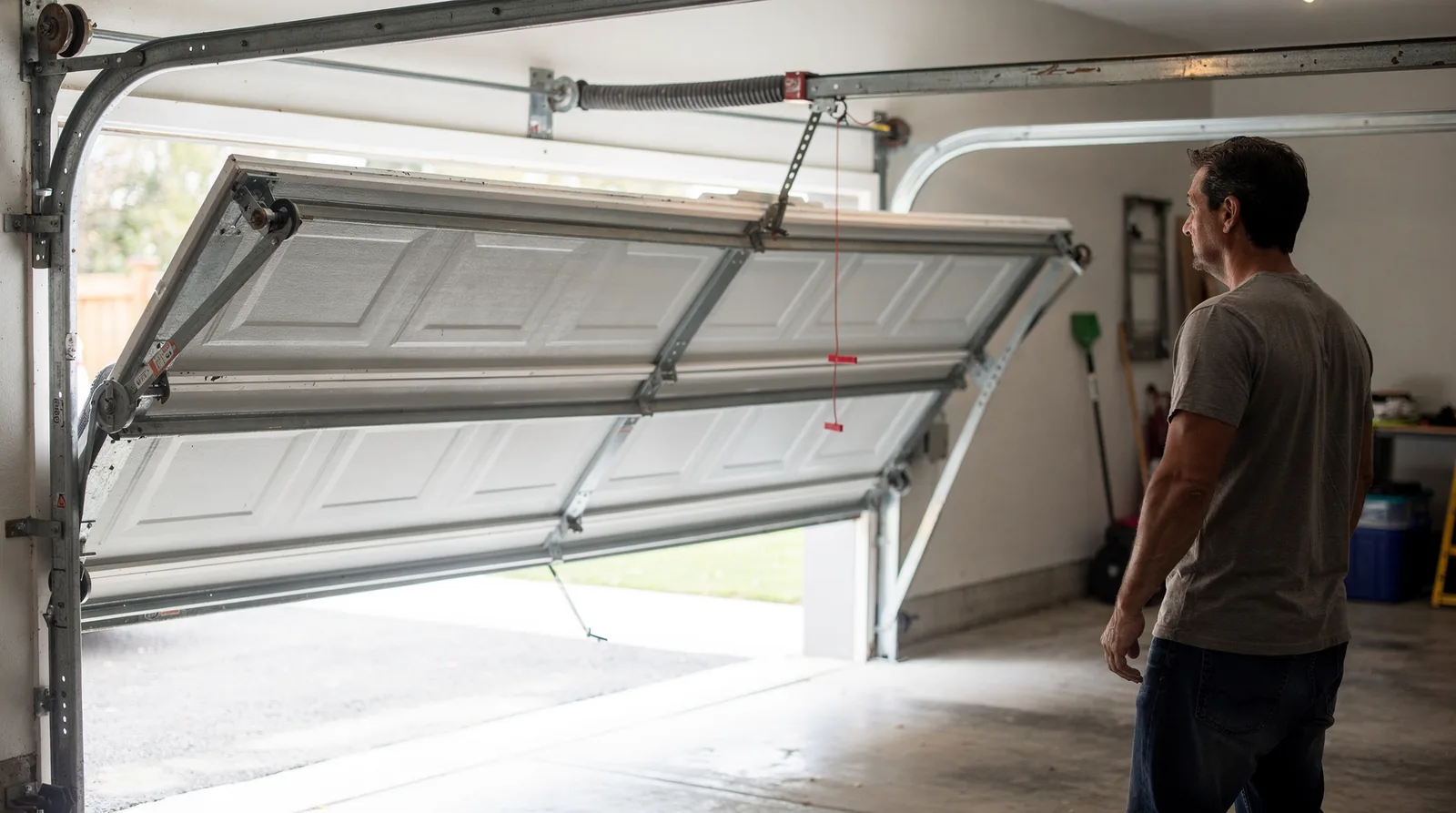
The clearest clue shows up at the bottom of the door. One side sits noticeably lower than the other, and the gap along the floor looks uneven from edge to edge. This visual mismatch rarely fixes itself and tends to worsen with repeated use.
Why does the door tilt while it moves?
A door that tilts mid-cycle signals a crooked garage door problem, not a cosmetic quirk. The opener often works harder than normal, straining audibly as it tries to compensate for the imbalance. That extra effort stresses motor components that weren’t designed to carry uneven loads.
Is it safe to ignore a door that still opens and closes?
Many homeowners delay calling for garage door repair simply because the door still technically functions. That logic feels reasonable, but it’s risky. Just because a system moves doesn’t mean it’s safe; prompt inspection is essential.
Watch for this combination of signs:
- One side sitting lower, with an uneven gap at the floor
- Visible tilting or wobbling during opening or closing
- An opener that sounds strained or labors more than usual
- A door that still operates, masking the severity of the issue
Spotting these signs early prevents minor misalignment from becoming a larger structural or safety concern.
Why Does a Garage Door Start Opening Crooked?
Mechanical or electrical trouble inside the system causes a crooked garage door, not random chance. Garage doors qualify as heavy machinery, lifting and lowering hundreds of pounds every single day. With that much weight constantly in motion, any imbalance shows up quickly and becomes hard to ignore.
A door that no longer tracks evenly is sending a signal. Somewhere in the system, a part has stopped carrying its share of the load. The lopsided movement homeowners notice often comes from a handful of common culprits working together or on their own.
What Usually Causes a Garage Door to Open Unevenly?
Several issues keep showing up when a garage door opens unevenly. Loose hardware, glitchy sensors, and opener malfunctions all create the same kind of tilted, uneven motion. Worn components and signal interference in the opener system can produce the same symptoms, so a quick visual inspection is the first smart step.
Common sources of an uneven elevator include:
- Loose brackets, hinges, or track bolts that shift the door’s weight distribution
- Sensor problems that cause the door to respond inconsistently on each side
- Opener issues, including worn gears or motor strain, that affect one side more than the other
- Signal interference or electrical faults that disrupt smooth, coordinated movement
Is an Uneven Door Always a Big Problem?
A properly functioning door stays balanced on both sides because its weight distributes evenly across the entire system. Once that balance breaks down, the door can’t open or close as designed. Even a minor shift in balance strains the opener and accelerates wear on other parts.
Catching the imbalance early matters. A door that opens crooked today often points to a developing issue that worsens without attention. Professional garage door repair identifies which component, whether hardware, sensor, or opener, is throwing off the balance before the problem grows more serious.
Which Door Parts Cause an Uneven Elevator?
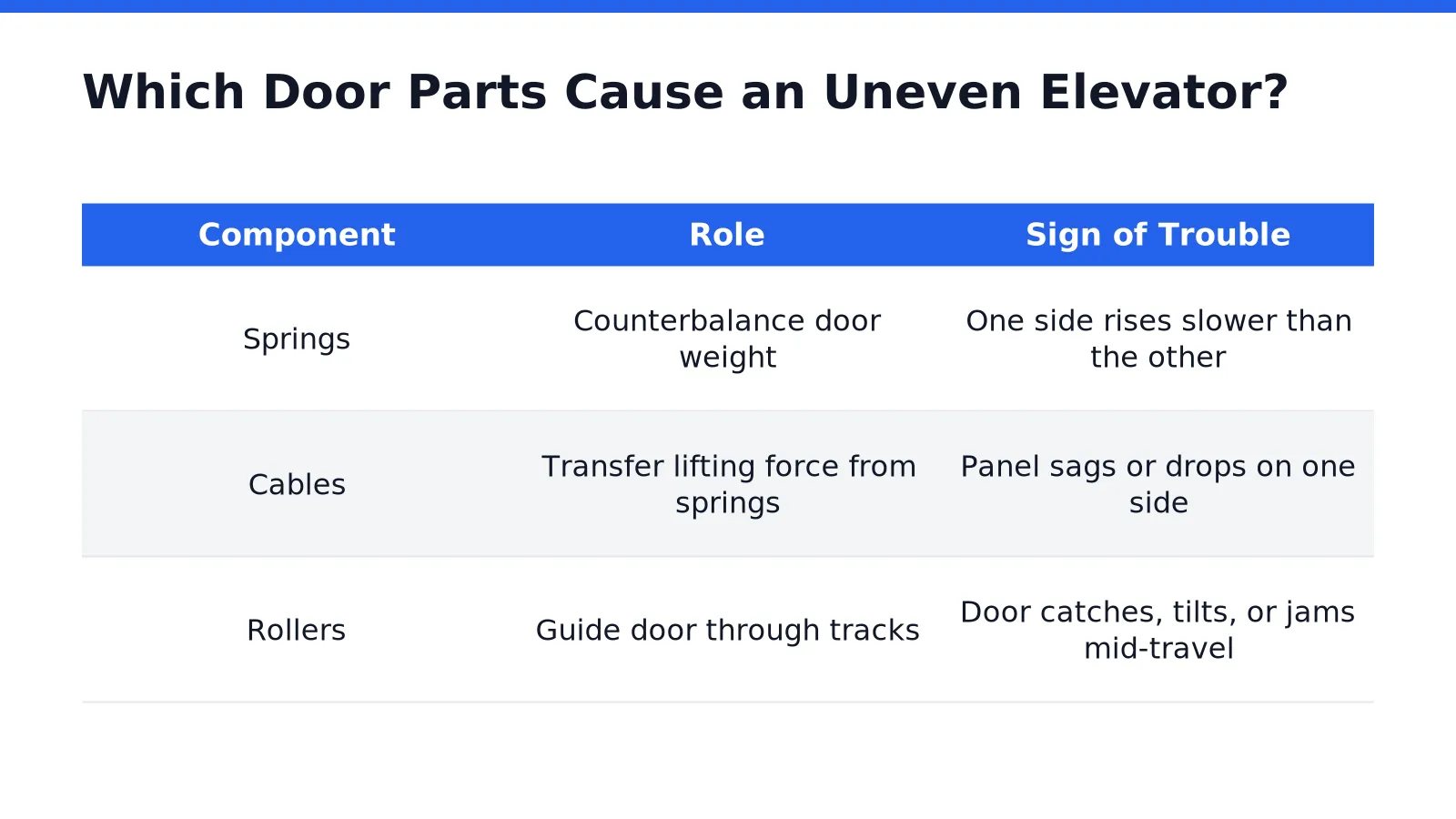
Three components typically explain why a garage door opens unevenly: springs, cables, and rollers. Each one plays a distinct role in keeping the door level. A failure in any single part throws the whole panel off balance. Spotting which component is struggling makes diagnosing a crooked garage door much faster.
Springs counterbalance the door’s weight, doing most of the heavy lifting on each side. When one spring wears out faster than its partner, the door no longer rises evenly. Instead, the stronger side pulls ahead while the weak side lags, creating that familiar tilted look.
Cables come next in the chain. These carry the lifting force from the springs down to the door itself. A cable that frays or stretches on one side can’t transfer that force efficiently. The panel on that side sags lower than the other.
Rollers complete the picture by guiding the door through its tracks. A cracked, jammed, or worn roller causes the door to catch mid-motion, tilt to one side, or hang crooked even when it’s fully closed.
Can a Single Bad Part Cause the Whole Door to Tilt?
Yes. Because springs, cables, and rollers work together as one lifting system, a failure in just one component disrupts the entire door’s balance. Professional garage door repair typically starts by checking all three. A problem rarely stays isolated to a single part for long.
Is a Crooked Door Linked to Noise or Sensors?
Yes, noise and sensor function connect directly to a crooked garage door. Clicking sounds and misaligned tracks frequently share the same root cause, and both deserve attention before the problem grows.
Timing offers the clearest clue. A clicking noise that occurs right as the door starts moving. Just before it stops, often points to the exact misalignment responsible for an uneven garage door. The two symptoms aren’t coincidental; they’re frequently two signs of one mechanical issue.
What does clicking during garage door movement mean?
Clicking almost always signals that something inside the system isn’t working the way it should. Don’t dismiss this sound as background noise, especially on a door that already looks off-balance. A door that opens unevenly and clicks is sending two warnings about the same underlying fault.
Ignoring these signs carries real consequences. Left unaddressed, the issue behind the clicking and the tilt can worsen, leading to sudden failures or genuine safety risks for anyone nearby.
Do sensors matter for a crooked door?
Sensors matter enormously once a door is behaving oddly. Their job is simple: stop the door from closing when something, or someone, is in the way.
A crooked garage door puts extra strain on that safety check. Consider what’s at stake:
- A misaligned door may not close evenly, making sensor accuracy more critical, not less.
- Sensors that aren’t working correctly turn a garage door into a genuine hazard.
- Combined with a mechanical fault, faulty sensors compound risk rather than offsetting it.
Professional garage door repair should always confirm sensor function alongside any alignment fix.
When Should You Call for Garage Door Repair?
Professional help becomes necessary as soon as a door shows signs of tilting, sticking, or struggling against its own weight. A crooked garage door signals more than a cosmetic flaw. It also raises safety and security concerns for the whole household. A misaligned door can compromise how well the garage protects what’s inside.
Homeowners in Irvine, CA have local access to a garage door service built around fast, on-site diagnosis of problems like a garage door opening unevenly. That local presence matters because uneven movement rarely fixes itself, and waiting often lets a small imbalance turn into a bigger mechanical failure.
Does an uneven door always mean replacement?
Not necessarily. Just as a malfunctioning remote doesn’t call for an immediate swap before anyone checks what’s actually wrong, a crooked door shouldn’t be written off as needing full replacement without a proper inspection first. Many balance issues trace back to a single worn part rather than the entire system. If you’re weighing repair versus a full replacement, Precision Door of Irvine’s Garage Door Design Tool lets you explore new door styles before you decide.
What should a repair visit cover?
A thorough garage door repair visit should never stop at the obvious tilt. Technicians should also check the sensor system. Sensors play a crucial role in protecting people and property from the force of a heavy, moving door.
Watch for these signals that a professional visit is overdue:
- The door hangs visibly lower on one side.
- The opener strains or makes new noises during operation.
- The bottom gap looks uneven across the floor.
- The door tilts noticeably while opening or closing.