
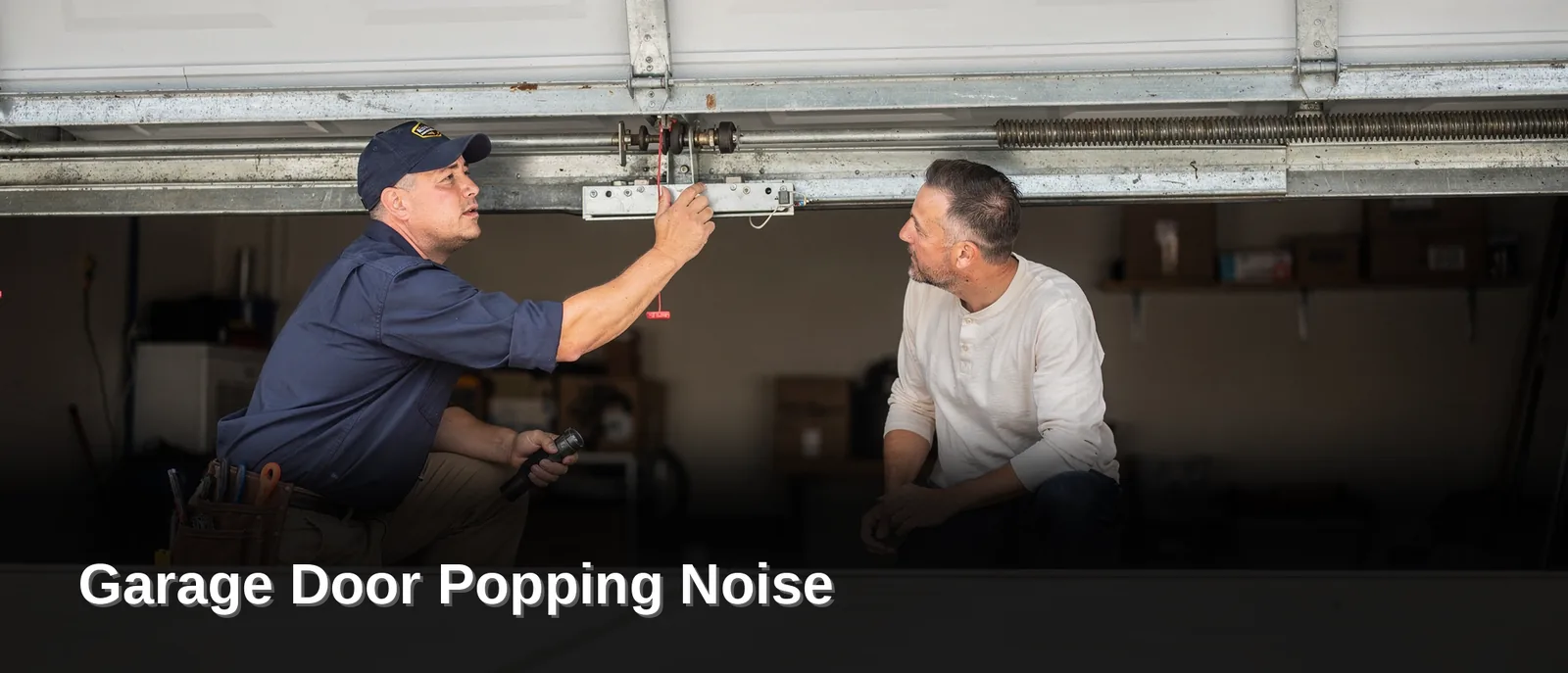
Popping sounds usually signal worn rollers, loose hardware, or a spring losing tension inside the garage door opener system. Homeowners who operate their door three to four times daily put it through over a thousand cycles each year, causing parts to shift or wear. Precision Door of Irvine technicians diagnose the exact cause and complete repairs using fully stocked service trucks.
What’s Causing That Garage Door Popping Noise?
A sudden garage door popping noise points to mechanical stress inside a system built to carry serious weight. Garage doors rank among the largest, most powerful machines in a typical home, lifting and lowering hundreds of pounds every single day. That kind of daily workload puts constant strain on springs, hinges, and tracks. Any new sound deserves a closer look, not a shrug.
Popping during opening or closing often signals that a component has shifted, worn down, or lost tension under that repeated load. The sound itself can feel alarming, and that reaction makes sense. Strange noises from a door opener are both annoying and concerning for most households. The system plays a direct role in home security and daily convenience. Pinpointing the source matters far more than ignoring it and hoping it fades.
Is a popping garage door dangerous?
A noisy garage door isn’t automatically dangerous, but it does suggest mechanical stress building somewhere in the system. Since these doors move hundreds of pounds in a daily cycle, unusual sounds often signal the early stages of a bigger problem. Treat the noise as a warning sign, not background chatter, to protect both the door and anyone nearby.
What should homeowners check first?
A few quick observations help narrow down the cause before calling in professional [garage door repair](https://precisiondoorirvine.com/garage-door-repairs/):
- Note when the popping happens: during opening, closing, or both.
- Watch the door’s movement for jerking, sticking, or uneven motion.
- Listen for a single pop versus a repeated, rhythmic sound.
- Check whether the noise comes from the door panels, the track, or the opener unit itself.
These details give a technician a faster path to diagnosing the real issue.
Could Worn Hardware Be Behind The Pop?
Worn hardware ranks among the most common culprits behind a sudden garage door popping noise. A new banging or popping sound that shows up out of nowhere during door movement, even while the door still opens and closes normally, usually signals that a part has started to wear down.
Rollers, hinges, and brackets take on constant stress every time the door travels along its track. Once these components loosen, they create sudden sounds, including clicks and pops, as the door moves. A noisy garage door rarely gets quieter on its own. Loose mechanical parts tend to shift further out of position with continued use.
What should a homeowner check first?
A visual inspection offers a reasonable starting point before deciding whether professional attention is needed. Checking the door panels, tracks, belt, and belt guide helps narrow down where a sound originates. Property managers walking this checklist should look for:
- Rollers that wobble or sit unevenly in the track
- Hinges with visible gaps, rust, or movement beyond normal range
- Brackets that have shifted away from the wall or frame
- Belt guides showing fraying, slack, or misalignment
Why does ignoring the noise matter?
Small mechanical issues rarely stay small. Left unaddressed, loose or worn hardware can worsen over time and lead to sudden failures or safety risks for anyone near the door.
A door that still “works fine” today can fail without warning tomorrow once hardware wear progresses far enough. Scheduling garage door repair at the first sign of a new noise, rather than waiting for a full breakdown, protects both the equipment and the people relying on it daily. Catching worn hardware early keeps minor wear from turning into an unexpected, inconvenient failure.
Is It Clicking, Popping, Or Something Else?
Clicking and popping noises signal different stages of the same underlying problem: a mechanical or electrical component struggling inside the garage door system. Distinguishing between the two sounds helps homeowners and property managers narrow down what needs attention. Timing matters most here.
A garage door popping noise typically surfaces mid-operation, while clicking tends to cluster around the start or stop of a cycle. The sound often happens right as the door begins moving or just before it comes to a rest. That pattern isn’t random. It usually points to a part straining under tension at the exact moments when the system shifts from stillness into motion, or back again.
Should Homeowners Worry About Clicking Noises?
Many homeowners brush off an odd click, assuming it’s just how the door normally sounds. That assumption carries risk. A clicking, noisy garage door usually signals a mechanical or electrical issue underneath, not a quirky but harmless habit.
How Do You Know If It Needs Repair?
Deciding whether to call for garage door repair or try a simple adjustment depends entirely on the cause. Some situations resolve with basic maintenance, while others demand professional diagnosis.
- Clicking that worsens over multiple openings
- Popping paired with visible door hesitation
- Noises accompanied by uneven movement or jerking
Property managers overseeing multiple units face added pressure. One overlooked click can escalate into a shared-door failure affecting several residents. Waiting too long to investigate turns a minor mechanical hiccup into a costlier repair down the line, and sometimes into a door that won’t open at all. Treating clicking or popping as a diagnostic clue, rather than background noise, protects the system before small issues compound into bigger ones.
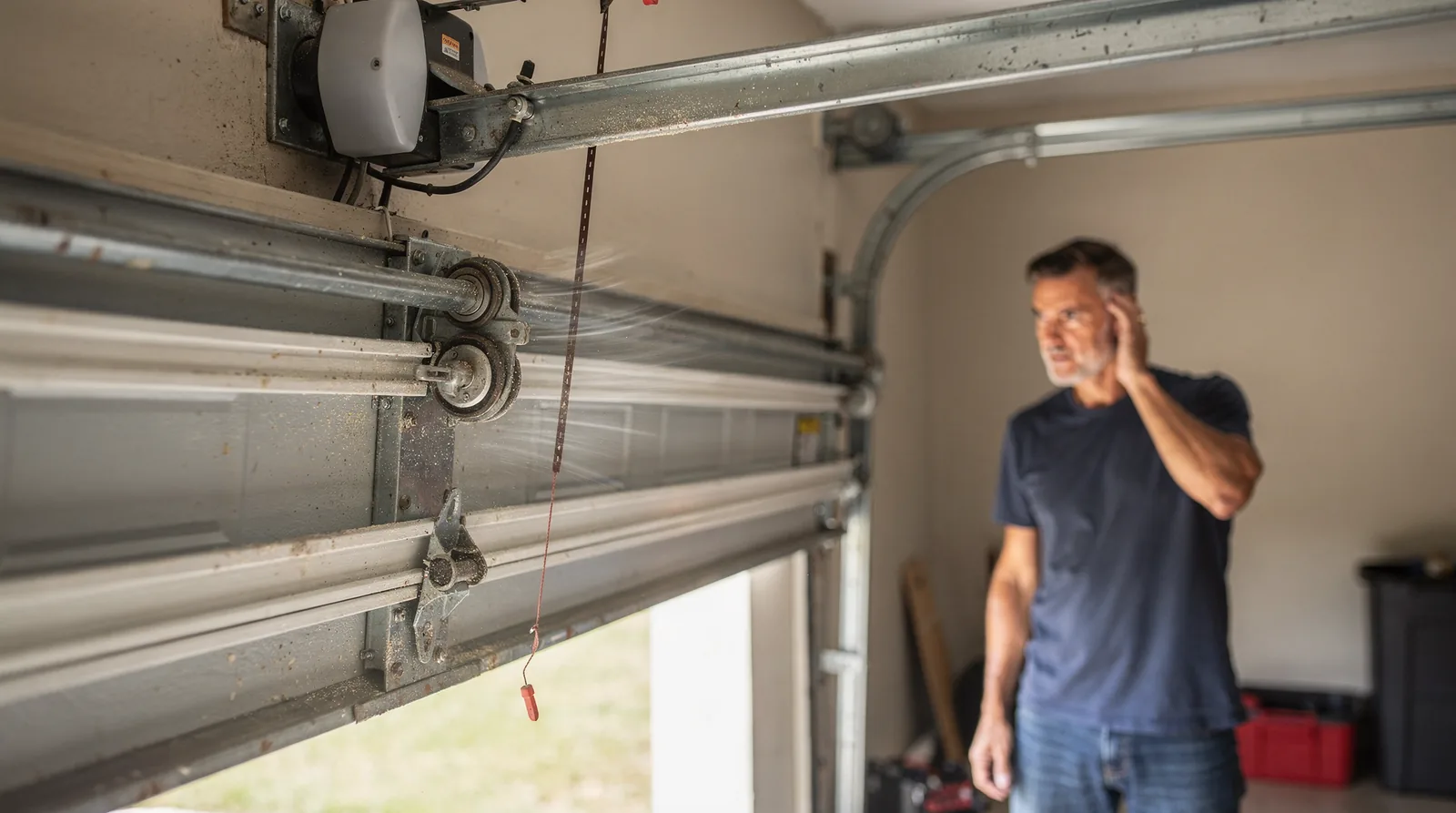
Why Does A Noisy Garage Door Matter?
A noisy garage door matters because unusual sound often signals a breakdown in the safety systems protecting a household’s family and vehicles. A typical garage door moves hundreds of pounds every day. Once something starts sounding off, safety becomes more than a convenience feature for homeowners and property managers alike.
Sensors sit at the center of that safety equation. These components play a crucial role in keeping people and belongings safe, especially when a garage door popping noise points to a sensor-related fault rather than a simple mechanical squeak. Properly functioning sensors do the following:
- Detect obstructions in the door’s path
- Halt closing motion before contact occurs
- Protect pets, children, and parked vehicles from injury or damage
What Happens If Garage Door Sensors Stop Working?
A door with failed sensors can’t stop closing when something, like a pet or child, is in the way. That gap turns a routine household fixture into a genuine hazard rather than a helpful convenience. Prompt garage door repair restores that protective function before an accident occurs.
Should A Popping Sound Be Ignored If The Door Still Opens?
No. A door can still open and close while masking a developing sensor or alignment problem underneath the noise. Waiting until the door stops working entirely removes the early-warning advantage that strange sounds provide. Addressing the sound early keeps the safety system, not just the motor, functioning as intended.
Residential property managers overseeing multiple units carry added responsibility here. A hazard in one garage affects every resident who parks or walks nearby. Treat popping sounds as a safety signal, not background noise, to keep that responsibility manageable.
How Do You Fix A Popping Garage Door?
Simple troubleshooting resolves most popping sounds without a full parts swap or new installation. A garage door popping noise often traces back to worn rollers, loose hardware, or a track that has shifted out of alignment. Most homeowners can rule out several causes before calling in a professional.
What Usually Causes The Popping Sound?
Several factors contribute to a noisy garage door, much like dead batteries or signal interference can disrupt a garage door remote. Hinges, cables, and springs under tension all produce distinct sounds when something is off. Identifying which component is making noise narrows down the fix considerably.
Homeowners can walk through this basic checklist before assuming the worst:
- Tighten any visible nuts, bolts, or brackets along the track
- Check rollers for cracking, apartment spots, or uneven wear
- Listen for the noise’s location: near the opener, the springs, or the hinges
- Watch the door’s movement for jerking or hesitation during a full cycle
When Should A Homeowner Call For Help?
A homeowner should call for professional garage door repair once basic checks fail to quiet the noise or the door moves unevenly. Garage doors communicate wear and tear through sound, and catching those signals early can prevent a minor issue from becoming a costly repair down the line. Ignoring persistent popping can lead to sudden spring failure or a jammed track, both of which disrupt daily routines and safety.
Precision Door of Irvine, based in Irvine, CA, offers homeowners a professional opinion when a popping or noisy door doesn’t resolve with basic troubleshooting. A trained technician pinpoints the exact source of the sound. Recommends the right fix, saving homeowners from guesswork and repeat visits.