
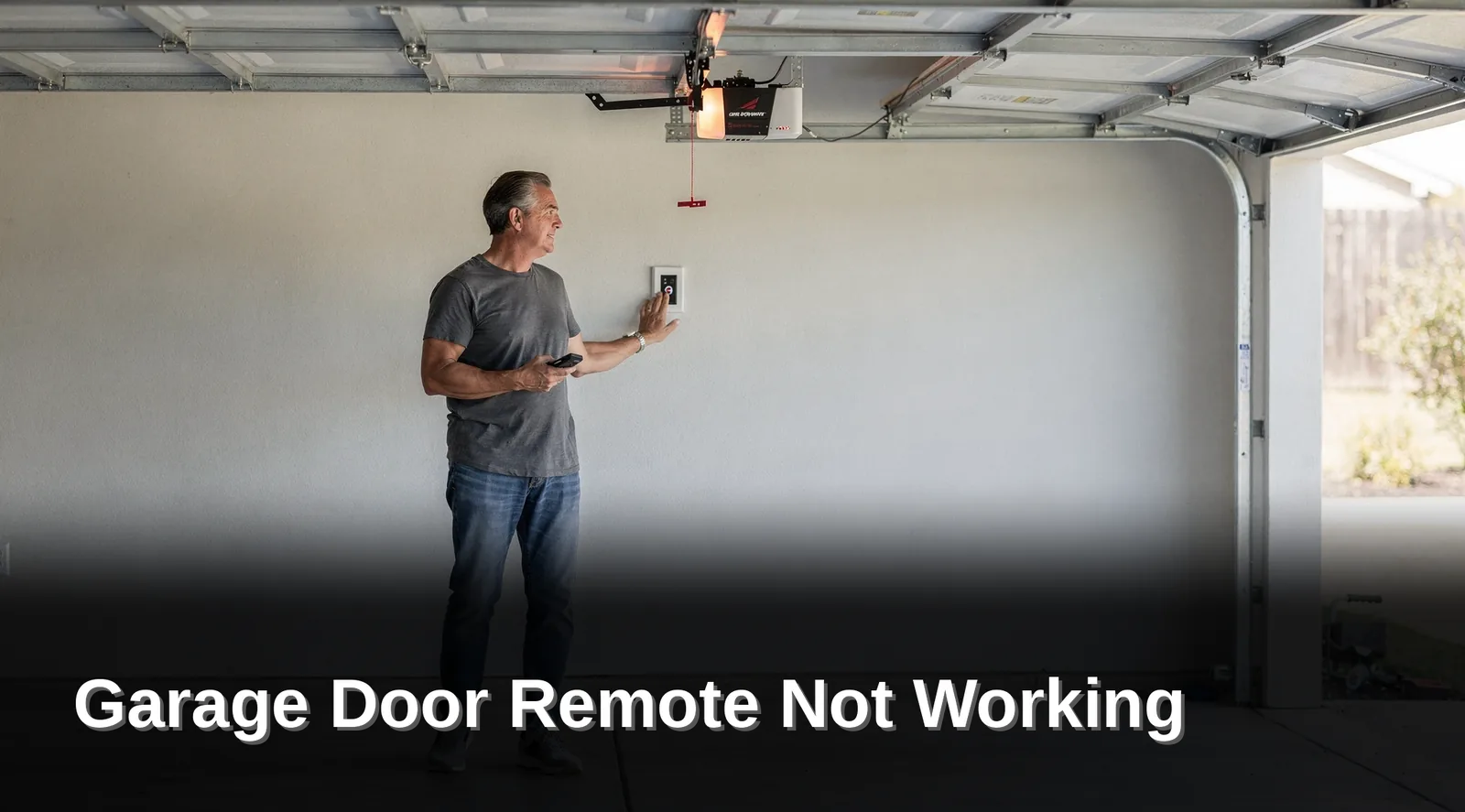
Dead batteries, signal interference, or a misaligned antenna commonly cause this issue. Wall buttons bypass the remote’s wireless signal entirely. Homeowners should replace remote batteries, check for nearby frequency interference, and reprogram the remote to the opener. Persistent failures signal a faulty receiver or circuit board, requiring diagnosis from Precision Door of Irvine.
Why Does the Wall Button Work but Not the Remote?
A working wall button paired with a silent clicker almost always points to the remote itself, not the opener motor. Garage door remotes deliver real convenience, letting homeowners open and close a heavy door with a single push of a button. When that convenience disappears, the wall-mounted control becomes the fastest diagnostic tool in the garage.
Testing the wall button and keypad first tells a property manager whether the fault sits with the opener system or the handheld unit. If the wall switch still raises and lowers the door normally, the opener’s motor, gears, and safety circuits are functioning as expected. That narrows the search to the garage door opener remote itself, saving a service call for a problem that often has a simple fix.
What usually causes this mismatch?
Several everyday culprits explain why a garage door remote not working still leaves the wall button fully operational:
- Weak or dead batteries inside the handheld unit
- A remote that has lost its programming or synced code
- Physical obstacles or interference blocking the remote’s signal path
Does a non-responsive remote always mean replacement?
Not usually. Many of these problems clear up through basic troubleshooting rather than buying a new unit. Swapping batteries, reprogramming the remote to the motor unit, and clearing line-of-sight obstructions resolve most cases without extra spending.
If those steps don’t restore response, the issue likely involves deeper garage door opener repair needs inside the motor unit itself. Precision Door of Irvine, serving homeowners throughout Irvine, CA, handles exactly this kind of opener-remote mismatch for local residents.
What Should You Prepare Before Troubleshooting?
Preparation starts with safety, not tools. Garage doors are large, powerful machines that lift and lower hundreds of pounds every day. Even a simple check on a garage door remote not working deserves caution. Homeowners and property managers should clear the door’s path and keep hands, pets, and children away before pressing any button.
Is It Safe to Test a Garage Door Opener Remote?
Testing a garage door opener remote carries real risk if the door activates unexpectedly during a check. Anyone troubleshooting should take proper safety precautions first, standing clear of the track and opener arm before pressing buttons. This single habit prevents injury during every other step that follows.
What Should Be Gathered Before Starting?
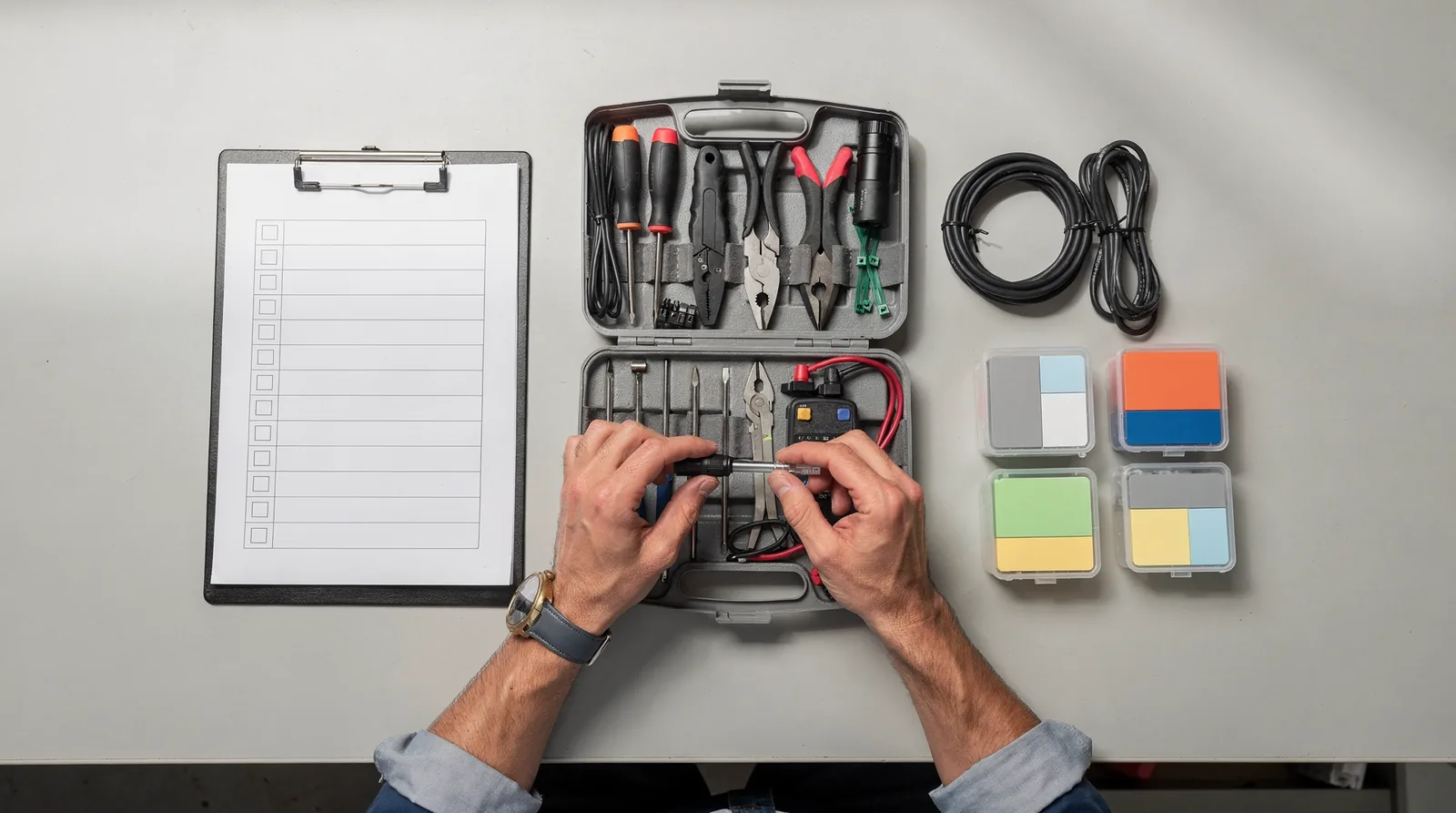
A short prep list keeps the process efficient. Avoids unnecessary garage door opener repair calls for problems that don’t require one:
- Locate a spare 3-volt lithium battery, since most newer remotes use this type.
- Note whether the remote needs reprogramming after a battery swap.
- Identify the wall button and keypad location for comparison testing.
- Clear the door’s swing path and keep bystanders at a distance.
Replacing a malfunctioning remote outright isn’t necessary before ruling out these basics. Rushing to a swap often wastes money when the real issue lies in a dead battery or a simple wiring check instead. Methodical preparation catches the easy fixes first.
How Do You Troubleshoot the Remote Step by Step?
A systematic check resolves most cases of a garage door remote not working without any tools beyond a fresh set of batteries. Property managers and homeowners should confirm the wall-mounted button and keypad still operate the door before testing the remote itself. If the wall controls fail too, the opener system likely has a broader fault rather than a remote-specific one.
Once the wall button is confirmed working, the following sequence isolates the problem:
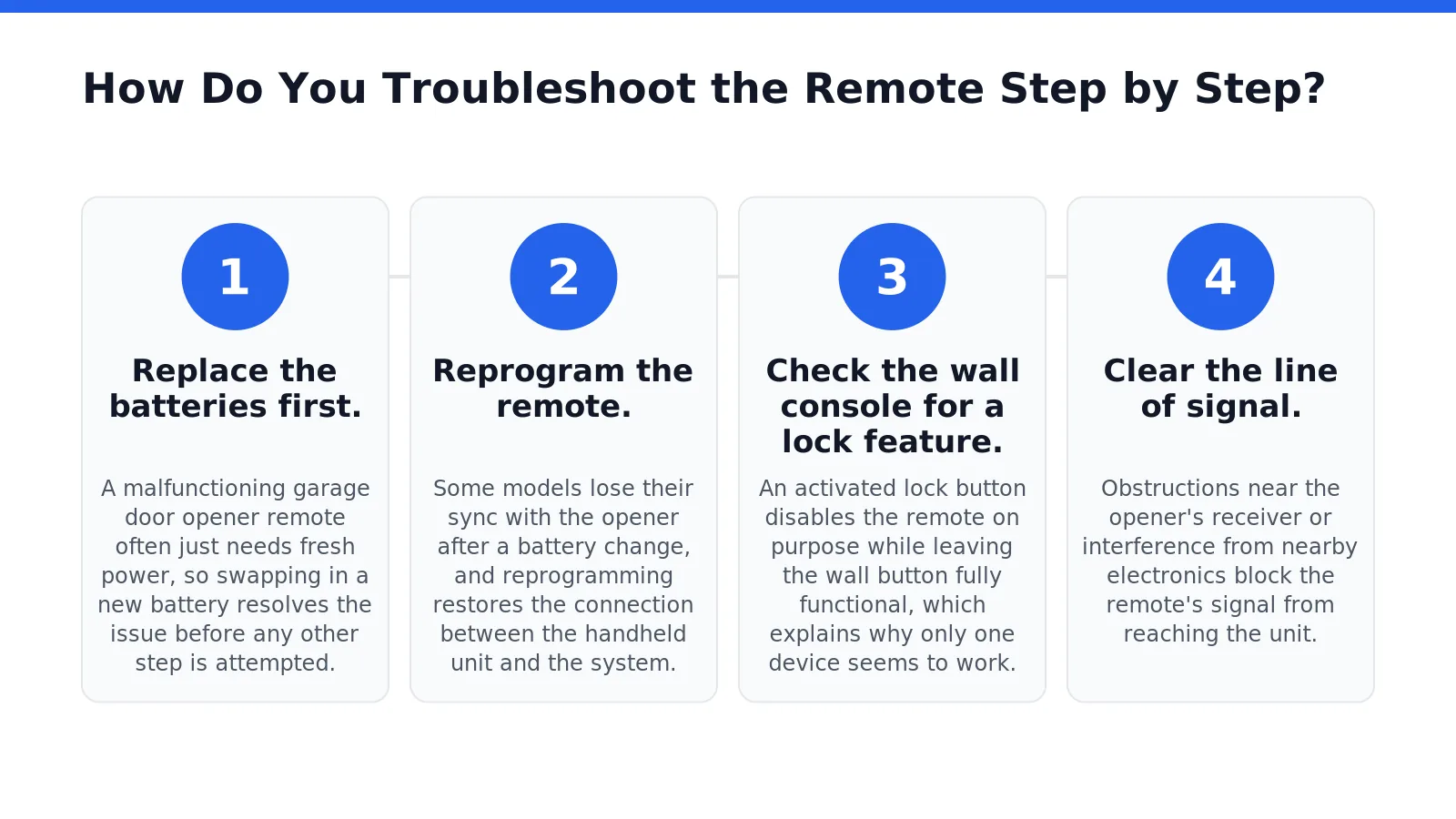
- Replace the batteries first. A malfunctioning garage door opener remote often just needs fresh power, so swapping in a new battery can resolve the issue before you try anything else.
- Reprogram the remote. Some models lose their sync with the opener after a battery change, and reprogramming restores the connection between the handheld unit and the system.
- Check the wall console for a lock feature. An activated lock button disables the remote on purpose while leaving the wall button fully functional, which explains why only one device seems to work.
- Clear the line of sight. Obstructions near the opener’s receiver or interference from nearby electronics block the remote’s signal from reaching the unit.
Why does the wall button work but the remote doesn’t?
This mismatch usually points to the remote, not the opener system. The wall button draws power directly from household wiring. A locked console, dead batteries, or an unsynced remote code are the most common explanations. Testing the wall button first narrows the diagnosis before any parts are replaced.
When should a professional handle garage door opener repair?
Professional garage door opener repair becomes necessary when battery replacement, reprogramming, and signal checks fail to restore function. Persistent failures often signal a deeper electrical or circuit-board issue inside the opener unit. At that stage, a trained technician can diagnose the system safely and confirm whether the opener, receiver, or remote needs attention.
Most remote issues respond to these simple steps, sparing homeowners an unnecessary replacement and restoring full function quickly.
What if the Wall Button Stops Working Too?
A silent wall button paired with a functioning remote points to loose wiring at the opener unit rather than a dead switch. This pattern matters because it narrows down the search before anyone starts disconnecting parts. Homeowners with a garage door remote that won’t work alongside a wall control issue should check the opener’s connection points first.
Does a working remote rule out a wiring problem?
Not entirely, but it does rule out one specific wiring run. When the opener responds correctly to the garage door opener remote, the wiring going to the photocell sensors is probably fine. That signal path shares circuitry with the door’s safety system. This leaves the wall button’s own wiring or terminal connections as the more likely culprit.
A few checks narrow things down further:
- Inspect screw terminals or push-in connectors at the opener housing for looseness.
- Gently tug each wire to confirm a secure connection.
- Listen for clicking noises during operation, since these often signal loose parts, sensor trouble, or broader opener issues tied to the same wiring system.
Why do clicking sounds matter here?
Clicking noises rarely appear in isolation. They frequently accompany the exact wiring faults that disable a wall button while leaving a remote operational. Both share components within the opener’s control system.
Ignoring these signals carries real consequences. Small wiring faults left unaddressed tend to worsen over time, leading to sudden door failures or safety risks for anyone using the garage. Scheduling garage door opener repair before a minor click becomes a complete shutdown protects both convenience and household safety.
When Should You Call a Professional Repair Technician?
A professional repair technician becomes necessary when basic troubleshooting fails to restore a garage door remote not working properly. When the opener system shows signs of a deeper mechanical fault. Delaying that call risks more than inconvenience: a stuck door can strand a vehicle inside or outside the garage, and a failing safety sensor may stop responding to real obstacles in its path. That gap between “mostly working” and “fully safe” is exactly where professional judgment matters most.
Several warning signs point directly to a service call rather than another round of DIY fixes:
- Replace the batteries and reset the garage door opener remote, then confirm the wall switch still fails to respond.
- Check the safety sensors near the base of the door for misalignment or blinking error lights.
- Note whether the door reverses unexpectedly or refuses to close fully.
- Schedule a professional inspection once any of these issues persist beyond a day.
Can a malfunctioning remote also be a safety issue?
Yes, in many cases it signals a broader sensor or opener problem rather than a simple electronics glitch. Properly working sensors stop the door from closing on a car, a pet, or a child, protecting against injury in real time. When those sensors work correctly, they prevent accidents by stopping the door the moment something blocks its path. An erratic remote, especially when paired with sensor errors, should never be treated as a cosmetic nuisance.
What happens during a professional service visit?
A qualified technician diagnoses why the remote stopped working, applies straightforward fixes where possible, and determines whether garage door opener repair or full component replacement is required. Precision Door of Irvine, based in Irvine, CA, provides this hands-on support when household troubleshooting reaches its limit. Homeowners planning a full door upgrade alongside opener service can also use the Garage Door Design Tool to explore style and material options.