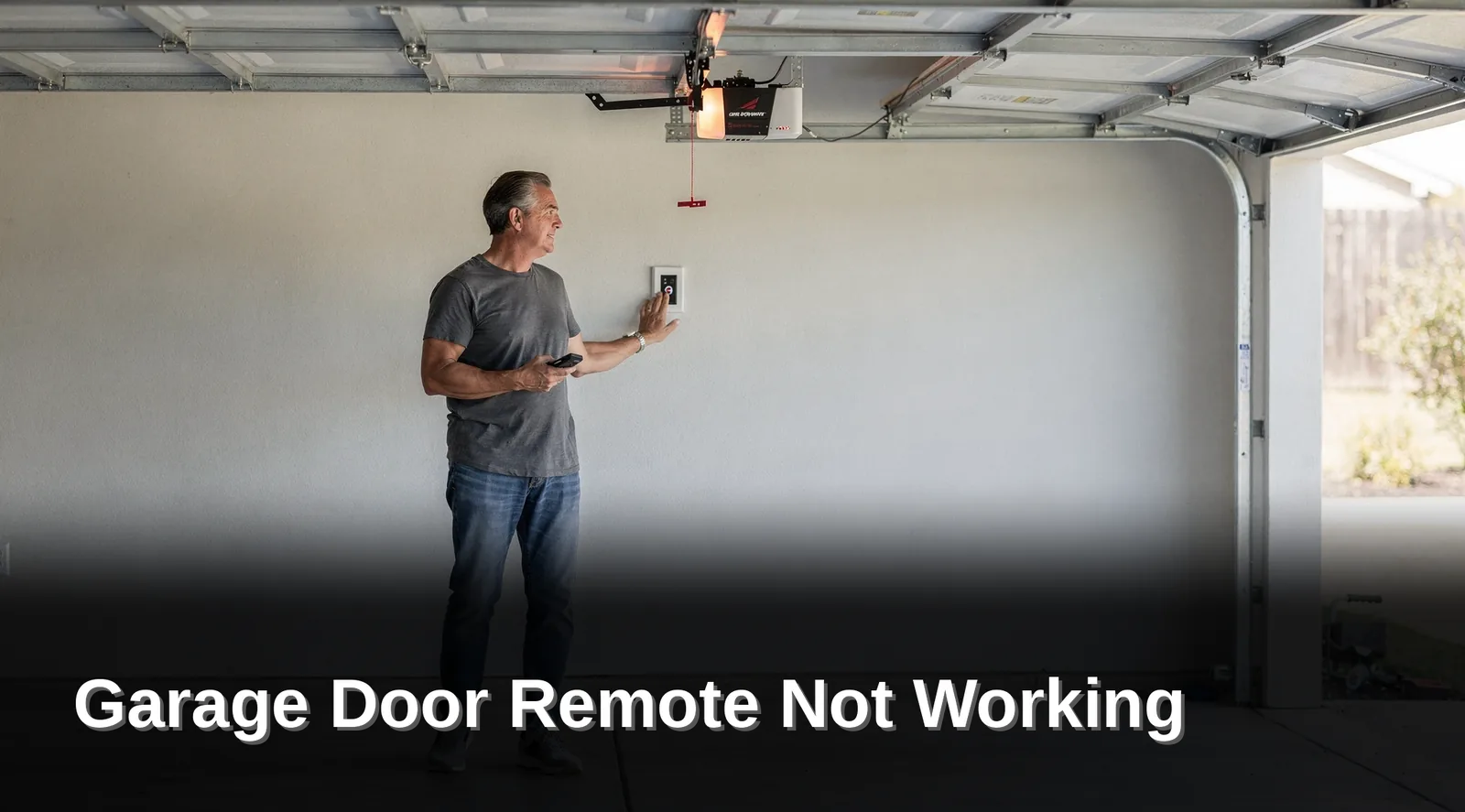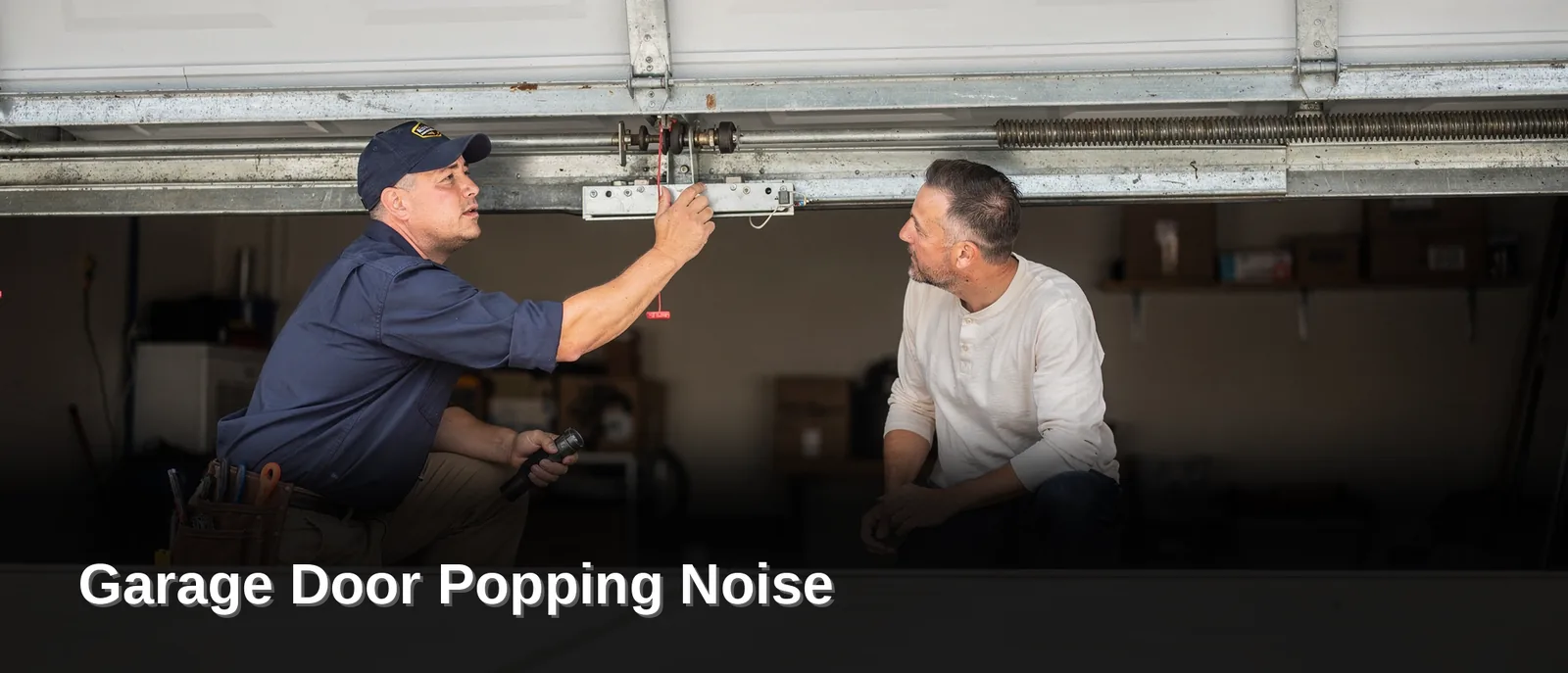

Reduced remote range usually traces to weak batteries, antenna obstruction, or radio frequency interference from garage lighting and nearby electronics. LiftMaster and similar openers rely on a clear signal path; metal shelving, LED bulbs, or a bent antenna weaken reception. Precision Door of Irvine technicians diagnose antenna, logic board, and interference issues, restoring full-range remote operation for Irvine-area homeowners.
What Do You Need Before Troubleshooting Your Remote?
A successful troubleshooting session starts with a few basic prerequisites: fresh batteries, a clear line of sight to the garage door opener, and a willingness to test one variable at a time. Garage door remote range issues rarely point to a broken unit. They usually trace back to signal strength, interference, or receiver positioning rather than a permanent defect. Garage door remotes exist for one reason: unmatched convenience, letting a driver operate the door easily from a car with the push of a button. Like any electronic device, though, a remote develops quirks over time that disrupt that convenience.
Before assuming the worst, gather a few items:
- Two fresh batteries matching the remote's specifications.
- A small screwdriver or coin to open the battery compartment.
- A clear view of the receiver unit mounted near the motor.
- Patience for testing the remote at varying distances.
Why shouldn't a homeowner replace the remote right away?
A garage door remote not working properly doesn't automatically mean the device has failed. Many linear remote problems resolve with basic troubleshooting rather than a full replacement. Jumping straight to a new remote often wastes money on a fix that simple diagnostics could have solved.
What tools help confirm the problem before calling for garage door opener repair?
A notepad to track which distances and locations trigger failures can be useful. Test from inside the garage first, then gradually move outward to see whether the issue involves the antenna, battery, or surrounding interference.
How Do You Check Batteries and Signal First?
Weak batteries and blocked signals cause most cases of limited garage door remote range, according to Precision Garage Door Service's troubleshooting guidance. Before assuming the opener or remote needs replacing, a few simple checks can resolve most complaints. Many common problems get solved with basic troubleshooting steps, saving homeowners from costly replacements they don't actually need.
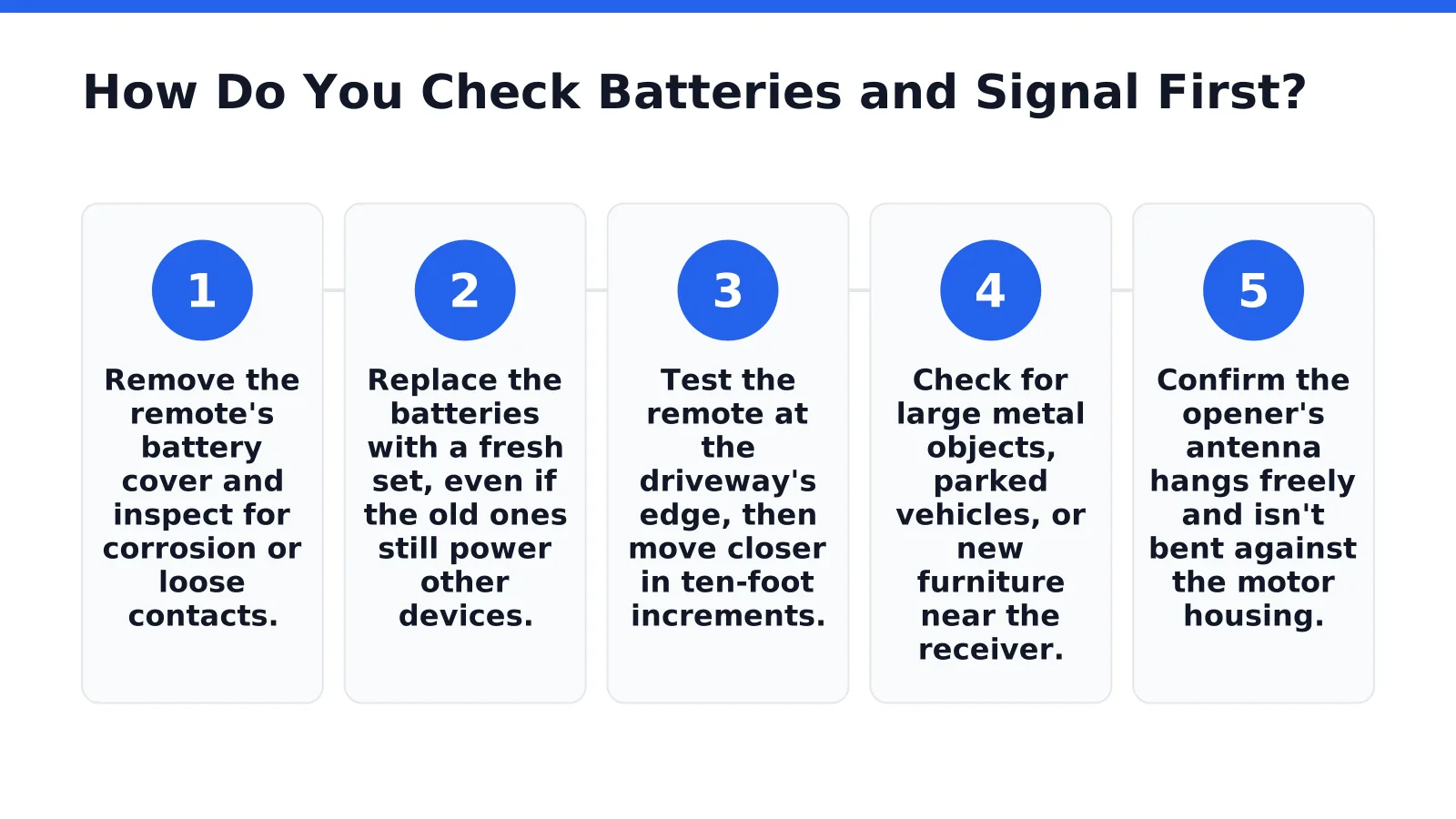
A short diagnostic routine narrows down the cause quickly:
- Remove the remote's battery cover and inspect for corrosion or loose contacts.
- Replace the batteries with a fresh set, even if the old ones still power other devices.
- Test the remote at the driveway's edge, then move closer in ten-foot increments.
- Check for large metal objects, parked vehicles, or new furniture near the receiver.
- Confirm the opener's antenna hangs freely and isn't bent against the motor housing.
Why does the remote only work up close?
A remote that only works up close usually points to weak batteries or a signal obstruction. A properly functioning remote should allow smooth, effortless operation from a comfortable distance, letting drivers open the door before reaching the driveway. When that range shrinks to a few feet, convenience turns into daily irritation.
What counts as a signal obstruction?
Metal shelving, parked cars, and even dense foliage near the garage entrance interfere with the radio signal traveling between the remote and the receiver. Household electronics broadcasting on similar frequencies also create interference. Clearing the line of sight between the remote and the opener's antenna often restores reliable range immediately.
If fresh batteries and a clear line of sight don't fix a garage door remote that doesn't work consistently, the receiver's antenna position or internal wiring may need attention. At that point, scheduling professional garage door opener repair prevents a minor glitch from becoming a locked-out driveway.
Why Does Garage Door Remote Range Shrink Outside?
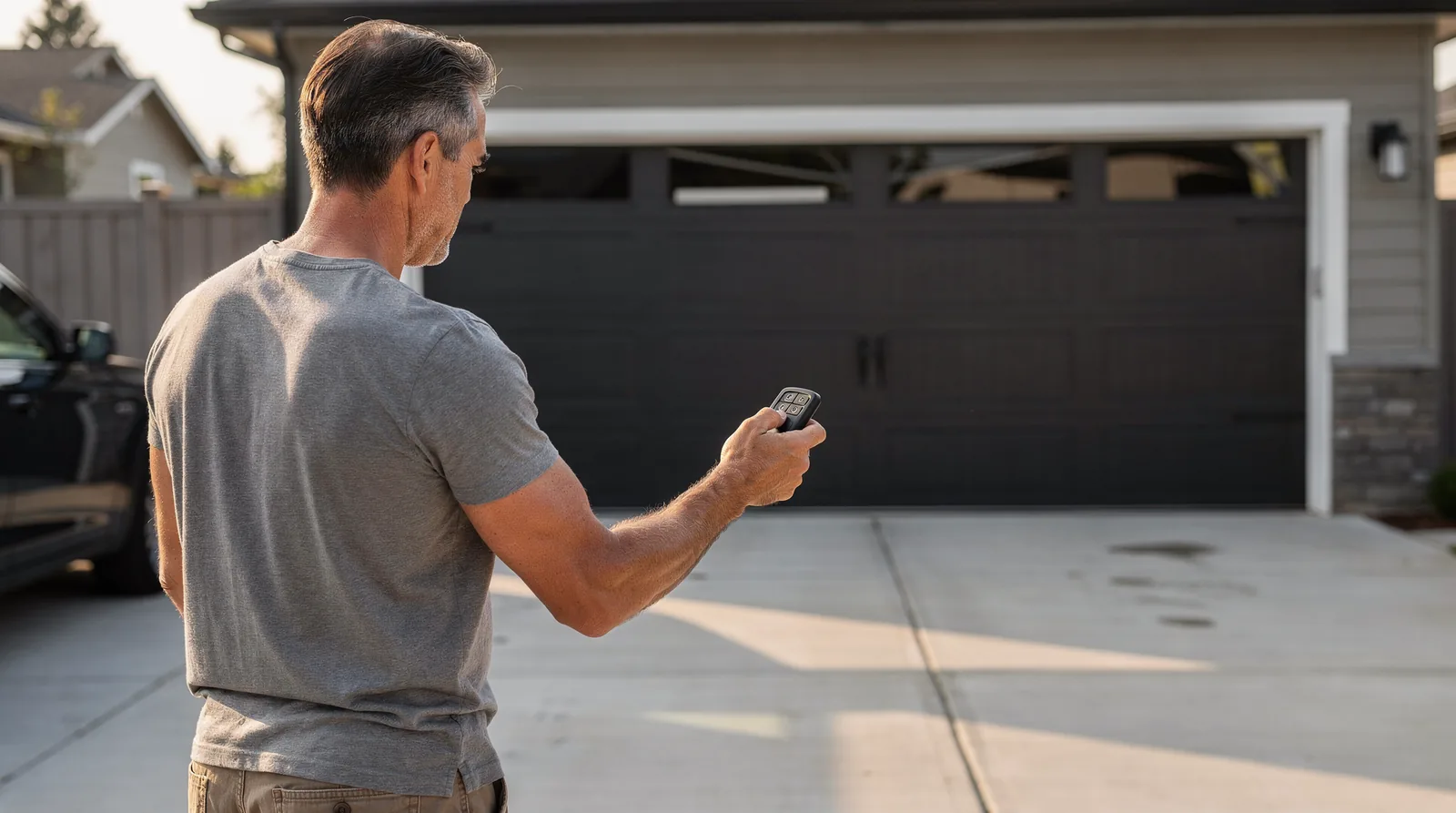
Garage door remote range drops outside the garage because the signal travels through open air instead of a confined, reflective space, and interference sources multiply the farther the handset gets from the receiver. Dead batteries and competing radio signals both weaken the connection, and a receiver that has drifted electronically compounds the problem. Homeowners facing this issue usually notice a pattern: the remote fires every time near the door but fades or fails from the driveway.
One documented case illustrates how severe this can get. A homeowner reported that the opener responded roughly one in ten tries when used outside the garage, while the same remote worked flawlessly indoors. That kind of inconsistency rarely points to a dead remote; instead, it suggests the receiver itself may need attention.
What Causes a Garage Door Remote to Stop Working Outside?
Several factors combine to cause garage door remote not working complaints outdoors. Signal interference from nearby electronics, along with simple battery depletion, ranks among the most common culprits. Aging receiver electronics can also drift over time, becoming less sensitive to signals from a distance, even when the transmitter works normally.
How Should Homeowners Troubleshoot Range Loss?
Before testing begins, make sure the remote has fresh batteries and a clear line of sight to the garage. Follow these steps in order:
- Replace the remote's batteries, since low power can mimic range loss.
- Test the remote at several distances, noting where response becomes unreliable.
- Compare indoor versus outdoor performance to isolate receiver sensitivity.
- Watch for clicking or unusual opener behavior, since this often signals an underlying system fault rather than a remote problem.
When troubleshooting stalls, professional garage door opener repair identifies receiver drift that no battery swap can fix.
How Do You Fix Antenna or Receiver Issues?
Fixing antenna or receiver trouble starts with understanding what the receiver expects from the handset. Once that relationship is clear, most garage door remote range complaints become simple to trace and correct. A technician typically works through a short sequence of checks before touching any wiring or hardware.
- Inspect the receiver antenna on the opener motor unit for damage, dangling wires, or bent positioning.
- Confirm the antenna hangs freely and isn't pressed against metal framing or storage shelving, which blocks the signal.
- Check the opener housing for loose parts, since loose components can interfere with signal reception.
- Listen for unusual clicking during operation, since clicking noises often point to mechanical or electrical issues inside the system.
- Rule out sensor problems near the opener, since faulty sensors can mimic the symptoms of a weak receiver.
- Test the remote at varying distances after each adjustment to measure improvement.
Why does my remote only work up close?
A remote that only works up close usually means the receiver isn't picking up the signal strength it needs from farther away. This often traces back to antenna positioning rather than a failed remote. In most cases, the problem is easy to diagnose and correct without replacing the entire opener system.
Can mechanical problems cause remote range issues?
Yes, mechanical or electrical issues inside the opener can mimic or worsen range complaints. A loose bracket, worn gear, or failing sensor sometimes produces both clicking sounds and inconsistent remote response at the same time. Addressing the mechanical issue often resolves the range complaint without any garage door opener repair beyond basic adjustment.
If troubleshooting doesn't resolve a persistent garage door remote not working issue, a professional inspection can identify whether the antenna, receiver board, or surrounding hardware needs attention. Catching these issues early prevents a minor annoyance from turning into a full opener replacement.
When Should You Call for Opener Repair Help?
Professional garage door opener repair becomes necessary when basic troubleshooting fails to restore reliable signal strength or consistent remote response. Garage doors rank among the largest, most powerful machines in a typical home, lifting and lowering hundreds of pounds daily. That scale means electrical components, including receivers and antennas, warrant careful handling rather than guesswork.
Persistent issues with garage door remote range often point to something beyond a weak battery. Because safety sensors play a crucial role in protecting people. Property, any receiver malfunction connected to those systems deserves a trained technician's review. A homeowner facing garage door remote not working symptoms that return after basic fixes should follow this sequence:
- Confirm you've tried all basic fixes, including replacing the battery and repositioning the antenna.
- Note the failure pattern, such as gradually shrinking range or failure only in certain weather.
- Schedule a professional diagnostic before the receiver or logic board sustains further strain.
How urgent is a failing remote range issue?
Delaying repair can turn minor receiver faults into sudden, complete failures. Left unaddressed, these issues can escalate into safety risks rather than simple inconveniences.
Can weak signal strength indicate a bigger problem?
Yes. Diminished range sometimes signals deeper wiring or board issues rather than ordinary interference, making early diagnosis the safer path. And if you're thinking about upgrading your garage door while you're at it, Precision Door of Irvine invites you to explore our Garage Door Design Tool to see what fits your home's style.